
SPC Flooring vs Laminate, Vinyl, Engineered & Hardwood Flooring in South Africa: Which Is Best?

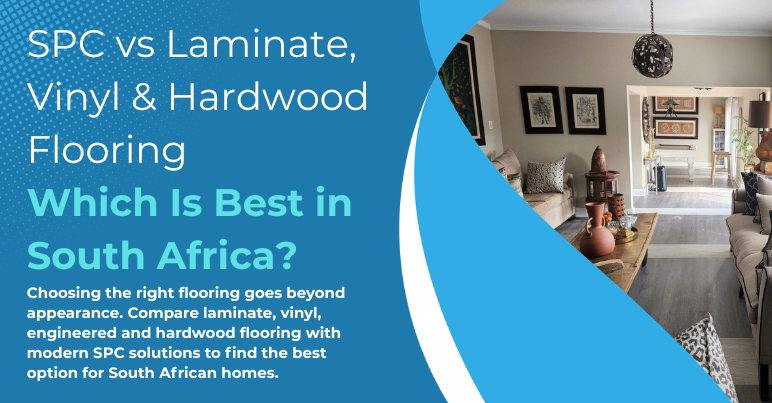
SPC Flooring vs Laminate, Vinyl, Engineered & Hardwood Flooring in South Africa: Which Is Best?
Choosing the right flooring is one of the most important decisions when designing or renovating a home or commercial space. Flooring is not only a visual feature, but a long-term investment that needs to perform under everyday use.
In South Africa, this decision becomes even more important. Temperature fluctuations, changing humidity levels and moisture movement from concrete slabs can all influence how flooring behaves over time.
Many homeowners choose flooring based on appearance or upfront cost, but long-term performance often depends on how well the material handles these local conditions.
This is where understanding the differences between laminate, vinyl, engineered wood, hardwood and SPC flooring becomes essential.
Overview of Flooring Types
There are several commonly used flooring options in South Africa, each offering different benefits depending on the application.
1) Laminate flooring is typically made from compressed wood-based board with a printed surface layer.
2) Vinyl flooring is a synthetic product often selected for its water-resistant surface and variety of finishes, although performance can vary significantly depending on product quality.
3) Engineered wood flooring combines a real wood veneer with a layered core for improved stability, but it still requires upkeep and ongoing care over time.
4) Hardwood flooring is made from solid timber and is considered a premium natural option. However, while the top surface can be maintained, the sides and underside remain vulnerable to moisture and damp over time.
5) SPC flooring is a rigid composite material made from limestone and stabilisers, designed for durability, structural performance, and a non-porous finish.
Each of these flooring types has its place, but they perform very differently over time.
Overview of Flooring Types
| Feature | SPC Flooring | Laminate Flooring | Vinyl Flooring | Engineered Wood | Hardwood |
|---|---|---|---|---|---|
| Moisture Resistance | Excellent (non-porous) | Low | Moderate | Moderate | Low |
| Durability | High | Moderate | Moderate | Moderate | Moderate |
| Maintenance | None (cleaning only) | None (cleaning only) | None (cleaning only) | Moderate | High |
| Stability | Excellent | Low | Moderate | Moderate | Low |
| Price Range | Competitive | Low | Low–Mid | Mid–High | High |
| Best Use | All areas | Dry areas | Light use areas | Living spaces | Premium interiors |
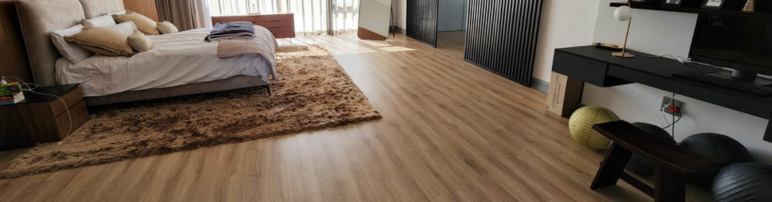
Laminate Flooring Pros and Cons
Pros:
● Affordable and widely available
● Good visual imitation of wood
● Easy to install.
Cons:
● Sensitive to moisture due to compressed board core
● Can swell, lift or warp over time
● Not ideal for kitchens or wet areas
In South African homes, where moisture rises from below floor slabs and environmental conditions vary, laminate flooring is vulnerable to long-term damage when exposed to water or humidity. For this reason, many homeowners look for more moisture-resistant flooring solution when choosing flooring for long-term performance.
Vinyl Flooring Pros and Cons
Pros:
● Water-resistant surface
● Widely available in a range of styles and product qualities
● Easy to install
Cons:
● Typically thinner and less rigid
● Can tear if heavy items are dragged across the surface
● Surface scratching can become visible relatively quickly compared to more rigid flooring systems
Vinyl flooring can perform well in certain applications, but its durability and long-term performance can vary significantly depending on product quality, thickness and how the space is used.
Engineered Wood Flooring Pros and Cons
Pros:
● Real wood surface for a natural look
● More stable than solid hardwood
Cons:
● Still sensitive to moisture over time
● Requires care and maintenance
● Higher cost compared to laminate or vinyl
While engineered flooring offers a premium aesthetic, it still requires careful environmental control to maintain performance.
Hardwood Flooring Pros and Cons
Pros:
● Natural, high-end appearance
● Can last for many years if properly maintained
Cons:
● Expensive upfront investment
● Requires ongoing maintenance (sanding, sealing)
● Sensitive to moisture and climate changes
Hardwood flooring remains a premium choice, but it is often better suited to controlled environments where moisture exposure is limited.
SPC Flooring Pros and Cons
Pros:
● Non-porous core that does not absorb moisture
● Highly stable under changing temperatures and humidity
● Durable and suitable for high-traffic areas
● Requires no maintenance, only routine cleaning such as sweeping and mopping
● Strong long-term value, starting from R410 per m² with a 20-year guarantee
Cons:
● Requires a properly levelled subfloor for installation
● Requires no maintenance, only routine cleaning such as sweeping and mopping
SPC flooring represents a modern, engineered approach to flooring. Its rigid, non-porous composite structure provides a level of durability and stability that addresses many of the common issues seen in traditional flooring materials, particularly in environments exposed to moisture and changing conditions.
Unlike wood-based flooring products, SPC is not susceptible to damage from ants or termites, making it well suited to South African conditions.
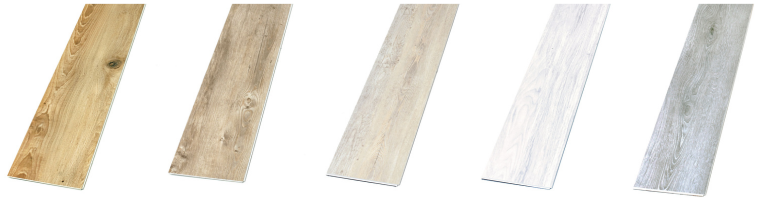
Best Use Cases for Each Flooring Type
Different flooring types suit different environments
Best for wet areas (kitchens and bathrooms):
SPC flooring, vinyl flooring
Best for living spaces:
SPC flooring, engineered wood
Best for premium natural aesthetic:
SPC flooring, hardwood flooring
Best all-round solution:
SPC flooring offers a balance of durability, moisture resistance, stability and value, with a wood grain finish that gives it a natural look and feel. This makes it suitable across virtually all residential and commercial applications, including areas where moisture exposure is a concern. For a more detailed breakdown, see our guide on best flooring for kitchens and bathrooms.
Why SPC Flooring Is Gaining Traction in South Africa
SPC flooring is becoming increasingly popular because it is designed with modern building conditions in mind.
Unlike traditional wood-based products, SPC flooring uses a rigid, non-porous mineral-based core that does not absorb moisture. This helps prevent swelling, warping and other common issues associated with laminate and hardwood flooring.
Unlike wood-based flooring options, SPC is also not susceptible to damage from ants or termites, which can be a concern in certain South African environments.
Its durability, stability and ability to perform without requiring ongoing maintenance make it well suited to both residential homes and commercial environments.
In addition, SPC flooring offers strong value for money, combining long-term performance with a competitive price point.
Final Verdict
Each flooring type offers its own advantages depending on the application, budget and design preference.
However, when considering long-term performance in South African conditions, factors such as moisture resistance, stability and durability become increasingly important.
SPC flooring provides a practical, modern solution that addresses many of the limitations found in traditional flooring options. With the right installation and product quality, it offers a reliable flooring solution that requires no ongoing maintenance, only routine cleaning, and is suitable for a wide range of environments.

Considering SPC Flooring for Your Space?
If you are comparing flooring options and want guidance based on real-world performance and South African conditions, the Fishers Decking and Flooring team is here to help.
Speak to our team for practical advice on selecting the right flooring solution for your home or project.
✔ Request a personalised quote
✔ Visit our showroom in Bryanston
✔ Explore real installations for inspiration
✔ Get expert advice on product selection
Call us at 083 444 0655 or email gary@fishersdecking.co.za to get started.